Practical Uses of the Diverse Collection of Line Stroke Pictograms
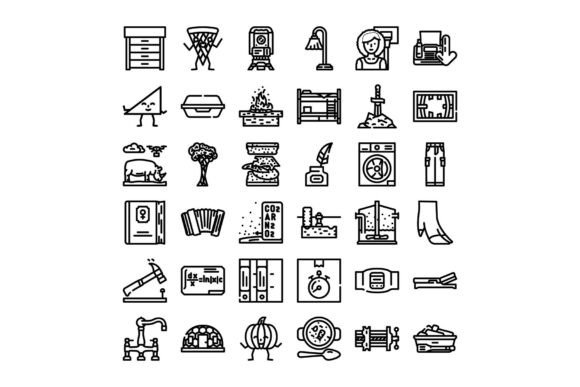
If you've ever struggled to communicate an idea visually without cluttering your design, the Diverse Collection of Line Stroke Pictograms might be exactly what you need. This set of clean, black-and-white outline icons covers a wide range of subjects—household items, food, animals, tools, science, and nature elements—all designed in a minimalist style that works across digital and print platforms. Whether you're creating an app interface, a classroom handout, or a marketing brochure, these pictograms offer a flexible visual language that speaks clearly and effectively.
Why Visual Clarity Matters in Everyday Communication
In today's fast-paced world, people absorb information quickly through visuals. A well-placed pictogram can replace paragraphs of text, making your message easier to understand at a glance. The Diverse Collection of Line Stroke Pictograms excels in this area by offering simple, recognizable symbols that don't distract from your core message. Because they're in black and white with clean outlines, they're easy to customize and integrate into any design system.
For example, imagine you're designing a nutrition app. Instead of writing "Breakfast," "Lunch," and "Dinner," you could use pictograms of a toast slice, a sandwich, and a plate with a fork. This makes navigation more intuitive and user-friendly, especially for non-native speakers or younger audiences who are still learning to read.
Real-World Applications Across Industries
The versatility of the Diverse Collection of Line Stroke Pictograms makes it a valuable asset across multiple industries. Here’s how different users can apply it in practical ways:
1. Educators and Instructional Designers
Teachers and curriculum developers often need to present complex information in digestible formats. Pictograms help simplify abstract concepts, especially for visual learners. For instance, a biology teacher might use animal and plant icons to explain ecosystems, or a language instructor could use food pictograms to teach vocabulary.
Additionally, educators working with younger students or special needs learners can use these icons to support visual schedules, making daily routines easier to follow and understand.
2. App and Web Designers
For digital product designers, usability is key. Icons must be instantly recognizable, scalable, and adaptable to different screen sizes. The line stroke pictogram set meets these needs with its crisp outlines and minimal detail. Whether you're designing a weather app, a task manager, or a travel guide, these icons help users navigate with confidence and clarity.
Because they're in black and white, they also serve as excellent base icons that can be recolored or layered with other design elements to match brand guidelines or interface themes.
3. Entrepreneurs and Small Business Owners
When you're building a brand from the ground up, visual consistency is crucial. The Diverse Collection of Line Stroke Pictograms allows small business owners to create professional-looking marketing materials without hiring a full-time designer. From social media posts to product packaging, these icons can be used to represent services, features, or benefits in a clean, approachable way.
For example, a local bakery might use food pictograms on their menu board or website to highlight offerings like coffee, pastries, and sandwiches. A handyman service could use tool icons to illustrate the types of repairs they offer.
4. Publishers and Content Creators
Bloggers, authors, and magazine editors often use visuals to break up long blocks of text and highlight key points. The line stroke pictogram set works well in infographics, sidebars, and feature boxes. Whether you're writing about home organization, DIY projects, or science facts, these icons help reinforce your message visually without overwhelming the reader.
How to Choose and Use the Right Pictograms
Before downloading or purchasing a set like the Diverse Collection of Line Stroke Pictograms, it's important to consider your specific needs. Here are a few practical questions to ask yourself:
- What is the main purpose of the icons? Are you designing for a website, an educational handout, or a mobile app? Different contexts may require different icon styles or levels of detail.
- Do the pictograms cover the topics you need? Make sure the collection includes the specific categories relevant to your project—like food, animals, tools, or science elements.
- Can you customize the icons? Check if the file format allows for easy resizing, color changes, and integration with your design tools (like Photoshop, Illustrator, or Figma).
- Is the licensing clear and appropriate? If you're using the icons for commercial work, ensure the license allows for that use without additional fees or restrictions.
Getting the Most Out of Your Pictogram Set
Once you've selected the right set, here are some tips to help you use the Diverse Collection of Line Stroke Pictograms effectively:
- Keep it consistent. Use the same line weight and style throughout your project to maintain a cohesive look.
- Pair with simple typography. Minimalist icons work best with clean, readable fonts to avoid visual clutter.
- Use spacing wisely. Don't overcrowd your layout. Give each icon room to breathe so it stands out clearly.
- Test for clarity. Show your design to others and ask if the icons are easy to understand. If not, consider simplifying or choosing a different symbol.
Final Thoughts
The Diverse Collection of Line Stroke Pictograms is more than just a design asset—it's a communication tool that helps you connect with your audience more effectively. Whether you're building a website, teaching a class, or launching a product, these icons offer a simple, elegant way to enhance your message. By choosing the right icons and applying them thoughtfully, you can create designs that are not only visually appealing but also intuitive and functional.